
-
The Dichotomy of Leadership - Jocko Willink
The followup to Extreme Ownership this book really clarifies the intent of the first book and balances some of the ‘extremeness’ the positions taken. Again this was an Audible read so very light on the highlights.
A team with a hands-off leader, thinks too much and comes up with strategies and tactics beyond the bounds of their responsibilities and competence.
-
No Filter - Sarah Frier
This book was a long time coming for me as a avid user of Instagram. It was fascinating to see the decision process behind the features that I use.
From the outside silicon valley looked like it was run by geniuses. From the inside, it was clear everyone was vulnerable, like he was, just figuring it out as they went along
The technical tools to manage accounts were still scrappy -or non existent. One day that winter Scooter Braun sounded an alarm to Instagram: Bieber was locked out of his app. But Instagram didn’t have a reliable system for resetting passwords. They told Braun they could do it over the phone, but Bieber would need to verify his identity. “All right” Braun said, “Justin’s going to call you guys.” Richardson picked up “Hey, this is Justin” he said. There were no security questions prepared, so that declaration would have to be enough proof of identity.
As he asked more questions and heard their stories and learned of their insecurities, he realized that everyone at the party was just trying to be better at their jobs.
Data was religion at Facebook, but never provided the perfect picture in terms of user behaviour. It could tell you what people were doing, but not necessarily why.
Clayton Christensen’s “jobs to be done” theory of product development”, which states consumers “hire” a product to do a certain task, and that it’s builders should be thinking about that clear purpose when they build.
If journalism is the first rough draft of history, books build on that important work to propose a second draft
-
Imagine If - Ken Robinson
This was recommended to me by my wife as ‘its just a taste of his longer works’. I will absolutely be picking up more from Ken Robinson this year.
It is because of our ability to imagine that we don’t live in the world as other creatures do, we create the worlds in which we live.
You could be imaginative all day without doing anything about it, and as such, nothing would ever change. To make use of our imagination we need to take them one step further: we need to be creative
Imagination allows use to envision alternative possibilities, and creativity equips us with the tools to bring them into existence.
The only times our lives look the sequential and intentional is when we sit down to write our resumes, at which point we do our best to hide the total chaos we’ve been living through in order to make it seem like we’ve been following an elaborate life plan.
The line between fact and fiction, between trustworthy sources and propaganda masked as click bait, is fading. Finding the truth in a sea of deception is becoming an increasingly difficult daily task, and one we must help our young people master. Critical thinking should be at the heart of every discipline in school.
Too often young people learn in groups but no as groups.
We have no control over our birth - who we are born to, which genetic cocktail we inherit, and where we are born. Who we become is shaped by the crosscurrents of our personalities and the circumstances in which we live.
Whenever you see the dates of someone’s life the most important part is the dash in the middle. What did they do between birth and death?
The features are aptitude and passion, the conditions are attitude and opportunity. Often the process goes something like: I get it; I love it; I want it; where is it?
When we talk about saving the planet, we really mean saving our own life upon it.
-
Extreme Ownership - Jocko Willink
This was a re-read from a couple of years back. This is the set reading for our leadership team this year so I felt it right to revisit some of these concepts. I had this on Audible so it doens’t lend itself to highlighting there are some fantastic concepts here delivered in a very accessible way.
-
The Beauty of Everyday Things - Soetsu Yanagi
One of my goals this year is to read one book at week throughout the year. Last year I missed this goal by about 6 books. As part of my study for each I’ll be putting together a post with some of my favourite snippets from the book.
This book has been sat on my shelf for six months so I decided to kick start the year with clearing that pile of shame. Quite a different read to my usual choice by some good highlights all the same.
If time remains unused, winter becomes a curse. Yet there is work to do, work to be done with the hands. Once this work begins, the clock no longer measures the passage of time.
People often judge the level of a civilisation by the amount of paper it uses. That, however, is simply a matter of volume, not quality. Quality is how the heart and soul of a civilisation should be measured.
The litmus test of a country’s cultural level should be the lives led by ordinary people
-
eCommerce Expo
As part of my ongoing work with the Okta events team I shot down to London to present Customers in the Crosshairs at the eCommerce Expo. While I was only there briefly it was a very different event to our normal security focused shows and we had some really good conversations after my talk.
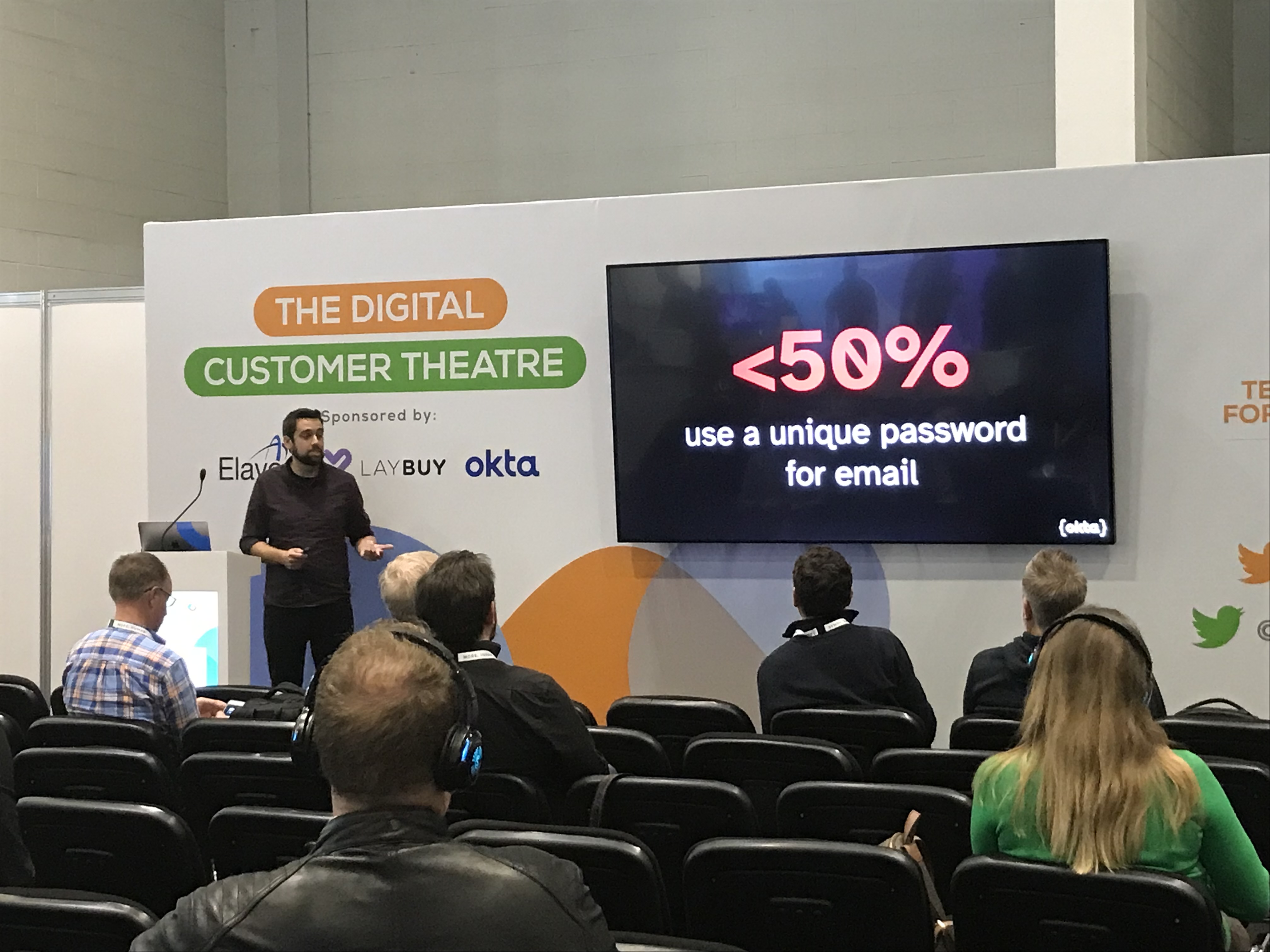
Presenting: Customers in the Crosshairs
Abstract: As users now expect more from the organisations they interact with online managing the identity of your customers is becoming much more complex. Password dumps, multiple devices and poor MFA adoption put pressure on security and development teams. All the time your competition is waiting in the wings to offer an alternative if your offering doesn’t meet the customer’s expectations.
-
PMF Connect
I had the opportunity to present to the Product Management Festival audience on achieving the frictionless customer experience. The recording is available on YouTube below
Presenting: Customers in the Crosshairs
Abstract: As users now expect more from the organisations they interact with online managing the identity of your customers is becoming much more complex. Password dumps, multiple devices and poor MFA adoption put pressure on security and development teams. All the time your competition is waiting in the wings to offer an alternative if your offering doesn’t meet the customer’s expectations.
-
DTX22
Conference season is now underway and it was really good to be back out in person this last week at DTX Manchester. Thank you to all of you who came along and said hi. The Delorean “where we’re going we don’t need passwords” stickers seemed to be a hit.
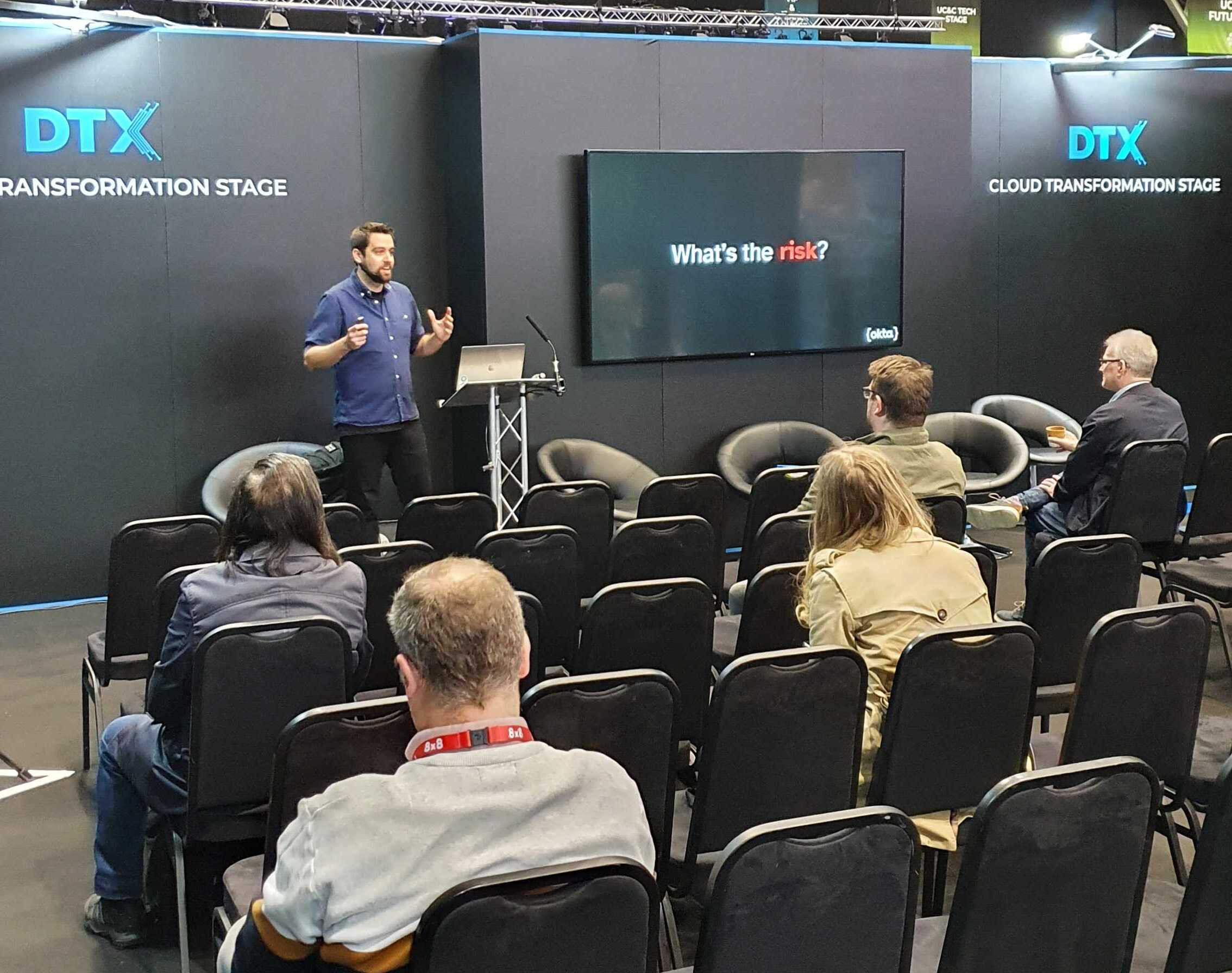
Presenting: Customers in the Crosshairs
Abstract: As users now expect more from the organisations they interact with online managing the identity of your customers is becoming much more complex. Password dumps, multiple devices and poor MFA adoption put pressure on security and development teams. All the time your competition is waiting in the wings to offer an alternative if your offering doesn’t meet the customer’s expectations.
subscribe via RSS